Ever since the first officer pulled over a speeding vehicle, the standard practice of making a traffic stop has been the driver side approach. But just because a procedure or tactic is time-honored that doesn't necessarily mean it is sound.
It's 0200 hours, dark and misty. While running radar, Officer Smith observes a vehicle traveling 82 mph eastbound on a four-lane highway. The driver is exceeding the speed limit by more than 17 mph. Officer Smith reacts. He hits his overhead lights, pulls up behind the violator, and motions him to pull to the right.
The speeding motorist yields without protest. Officer Smith guides his patrol car onto the shoulder, tactically positions it at a 45-degree angle with the wheels turned out, giving him ample cover should a heated incident occur, and flips on the unit's spotlight and aims it in the driver's rearview mirror.
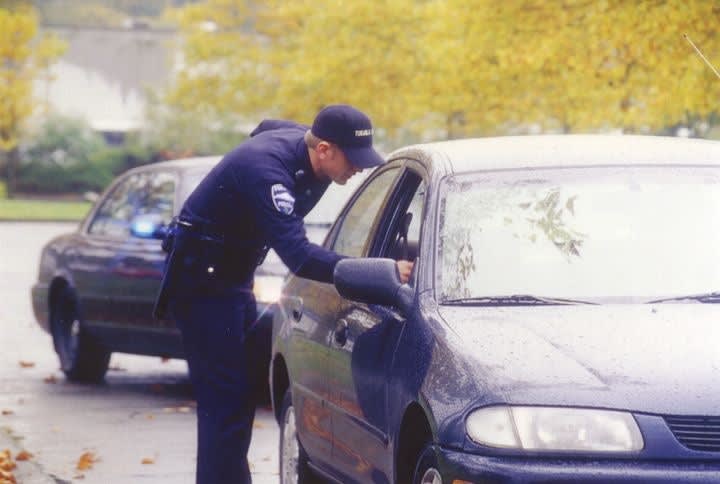
Smith, cautious of oncoming traffic and following all of his self-preservation instincts and learned safety measures, approaches the violator's vehicle on the driver side. As he walks on the wet gravel of the shoulder, he checks the trunk, backseat, and passenger compartment for possible threats.
Illuminating the driver with his flashlight, Smith positions himself in a tactical position behind the known threat area alongside the vehicle, weapon side away and hand on his weapon ready to react. He then makes first contact with the driver, saying, "Good evening. Officer Smith with Everywhere P.D. The reason I...."
The silence of the night is broken with the sound of a single gunshot and squealing tires. There remains a dead calm with the only sounds to be heard the creatures of the night, the steady drizzle of the rain, and the rotating click and whir of the light bar.
Ever since the first officer pulled over a speeding vehicle, the standard practice of making a traffic stop has been the driver side approach. But just because a procedure or tactic is time-honored that doesn't necessarily mean it is sound.
The driver side approach has resulted in numerous injuries and deaths of law enforcement officers at the hands of violators and oncoming traffic. Some agencies and academies still teach it as the primary and reasoned way of contacting the driver and some departments decree that it is the most politically correct way to handle the stop and not violate the rights of the driver.
But neither of these reasons considers the safety of the officer who is making the traffic stop. Shouldn't this be the primary concern? Not a little potential embarassment for the motorist.
And there is a much safer way to make a traffic stop.
Consider the passenger side approach. By making contact with the driver along the right side of the car, an officer can reduce by half the areas of concern, eliminating the worry of being struck by an approaching vehicle. Further, by not having to concentrate on passing cars, the officer can now pay attention to the driver.
Also, if the driver is a criminal and not Joe Citizen trying to get home a little faster, then the officer has one of the most important advantages that anyone could ever have in a potentially violent situation: the element of surprise. Most drivers have been conditioned by previous experience and TV and movies to expect the officer to approach on the driver's side during a traffic stop.
Not only is the passenger side approach unexpected by motorists, it also allows the officer to position himself in a face-on position toward the passenger side doorframe. For a right-handed officer, this technique offers a view into the passenger side window with gun side ready for a rapid response. Furthermore, whether an officer is left- or right-handed, the passenger side door and passenger side of the vehicle offer cover.
The passenger side approach also gives the officer room to maneuver. If a gunfight occurs, he or she can move left, right, back up, or drop straight to the ground without having to worry about oncoming traffic.
Finally, if the officer elects to have the driver unlock and open the passenger door, it allows him or her an unobstructed view of the interior of the passenger compartment. It also allows the officer to receive information and paperwork from the driver more easily.
Another traffic stop option is the driver call-out. This method allows the officer to contact the driver one-on-one outside the violator's vehicle on the shoulder of the road by the officer's unit. This method works well for interdiction officers and with vehicles having more than one occupant. The downfall of this type of stop is the lack of cover while speaking with the violator. However, the officer still has considerable freedom of movement and room to maneuver in a fight.
The driver call-out may also be a good idea in states that permit possession of concealed firearms inside the passenger compartment of the vehicle. By removing the driver from his or her vehicle, you have limited the potential threat of a hidden weapon to the driver's person. Just remember that in all cases, if the driver returns to his or her car for forgotten items, this is when you need to be very alert and prepared to prevent the retrieval and unlawful use of a weapon.
We know from years of experience and far too many officer deaths that the "driver side stop" method is unsafe. This technique has led to numerous horrific incidents involving both shootings and vehicles striking officers. There are safer ways to effect traffic stops and they should be implemented by all agencies before another officer dies needlessly.
Les Bullard is a former detective with the St. Charles Parish (La.) Sheriff's Department. Since 1998 he has been the Southeast Law Enforcement Training Manager for AIS/PRISim, specializing in officer survival training.